

Views: 0 Author: Site Editor Publish Time: 2026-03-02 Origin: Site


Drones are everywhere today, but so are new risks. The future of drone jammer technology now depends on next generation drone jammer systems and AI powered drone jammer solutions. In this article, you will learn how integrated radar drone jammer platforms and counter UAS drone jammer innovation, including advanced products from Ragine, are shaping safer airspace.
Drone technology is advancing at remarkable speed. Many commercial UAVs now use encrypted digital links, dual-frequency GNSS systems, and autonomous flight capabilities that allow missions to continue even after signal disruption. Military platforms introduce swarm coordination, anti-jamming resistance, and AI-assisted navigation. These innovations directly challenge conventional drone jammer technology. Static, high-power interference is no longer sufficient. Instead, military drone jammer technology trends highlight adaptive waveform generation, spectrum sensing, and protocol-specific disruption methods.
The complexity of threats also extends to intent. Some drones may perform simple surveillance, while others may carry payloads or act as communication relays. Counter UAS systems must therefore incorporate classification logic that differentiates risk levels. Future drone jammer technology must operate as part of an intelligence-driven defense ecosystem rather than as a standalone emission device.
Civil drone traffic continues to grow through urban air mobility initiatives, automated delivery networks, and smart city projects. Industrial sectors rely on UAVs for cost-effective inspections. Meanwhile, defense forces expand their use of tactical drones for reconnaissance and precision strike coordination. This widespread adoption increases airspace density and complicates airspace security operations.
Counter UAS systems must balance protection and coexistence. An airport deploying an advanced drone jammer system cannot disrupt legitimate inspection drones or emergency response operations. Therefore, future systems integrate identity recognition, remote ID verification, and real-time air traffic coordination. This layered intelligence ensures that anti drone measures are proportional and legally defensible.
Traditional RF jammers transmit wideband interference to overwhelm drone communication channels. While effective in isolated zones, this method introduces collateral risks in urban environments. Wi-Fi networks, GNSS signals, and public communication systems may be unintentionally affected. Regulatory agencies impose strict restrictions on civilian jamming activities.
Future counter UAS drone jammer innovation emphasizes directional transmission, digital beamforming, and timed emission bursts. Instead of continuous broadcasting, modern systems activate only when detection algorithms confirm a threat. This precision reduces interference while preserving mitigation effectiveness.
Note: A comprehensive risk assessment should evaluate local communication infrastructure before implementing high-power jamming solutions.
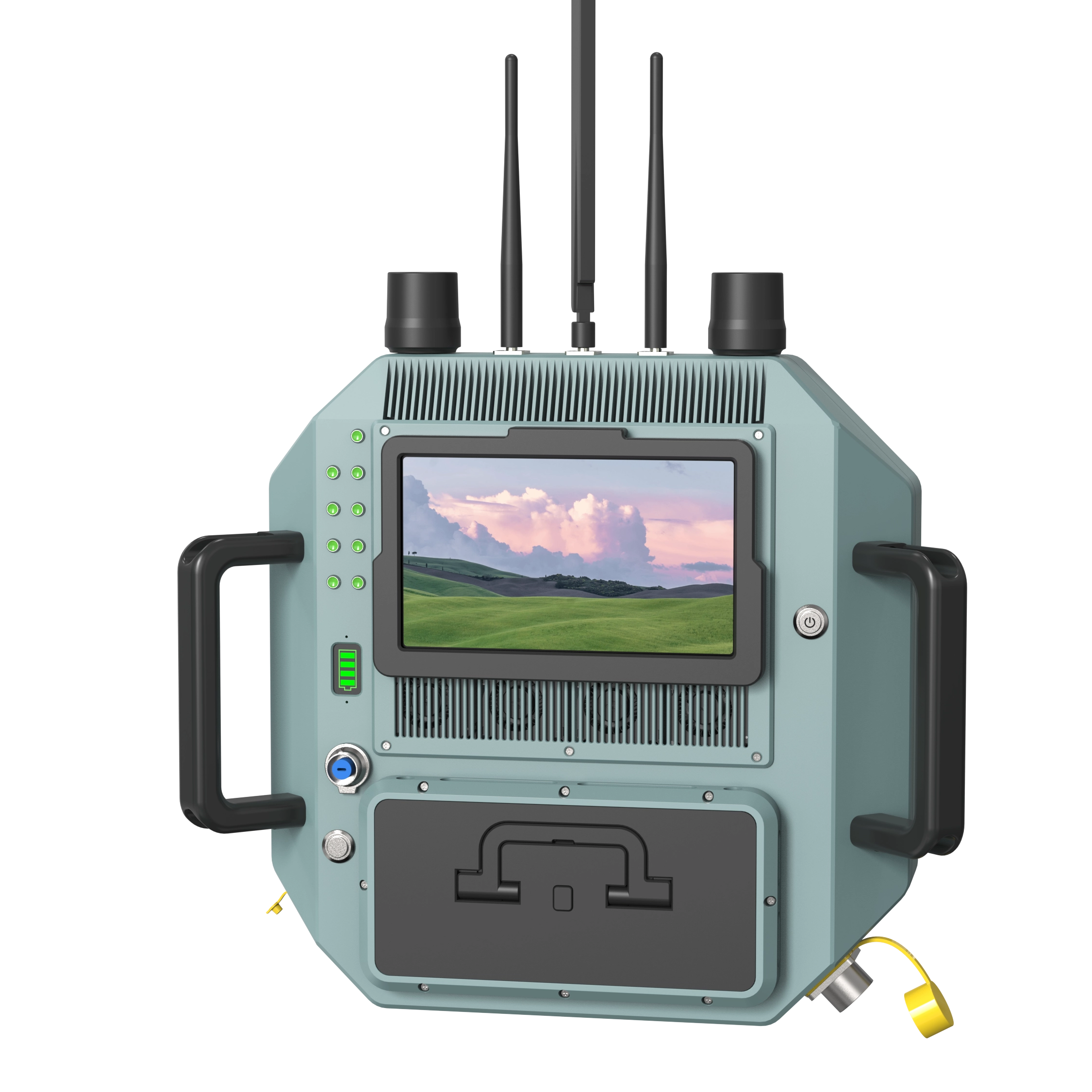
Software defined radio architecture represents a foundational advancement in future drone jammer technology. By enabling firmware updates and modular waveform libraries, operators can adapt to emerging drone protocols without replacing hardware. Multi-band coverage supports disruption across common communication and navigation frequencies, including 2.4 GHz, 5.8 GHz, and GNSS bands.
This flexibility reduces long-term costs and ensures readiness against rapidly evolving UAV defence strategies. Organizations adopting next generation drone jammer systems benefit from scalable architecture that supports integration with detection sensors and command centers.
AI powered drone jammer solutions transform reactive interference into intelligent response. Machine learning models analyze RF patterns, radar data, and behavioral signatures to classify drone type and predict intent. This real-time analysis reduces false alarms and improves response speed.
For example, AI can distinguish between a commercial photography drone operating legally and an unidentified UAV approaching restricted infrastructure. Such discrimination prevents unnecessary activation and supports regulatory compliance. Continuous AI model updates ensure adaptation to new drone models and signal patterns.
An integrated radar drone jammer platform consolidates detection, tracking, classification, and mitigation within a unified interface. Radar identifies objects within designated airspace. RF sensors confirm communication links. AI modules assess risk levels. The jamming subsystem then applies precise mitigation measures.
Ragine’s ecosystem approach illustrates this integrated concept. By combining R-Eye detection systems with R-Shield handheld and fixed UAV jamming devices, the platform delivers end-to-end low-altitude defense. This seamless workflow reduces response latency and simplifies operator training.
Technology Element |
Operational Benefit |
Strategic Value |
Software Defined Radio |
Rapid protocol updates |
Long lifecycle adaptability |
AI Classification Engine |
Accurate threat filtering |
Reduced operational risk |
Multi-Band Coverage |
Compatibility with diverse UAVs |
Future resilience |
Integrated Platform |
Unified command workflow |
Faster decision-making |
Cognitive drone jammer technology continuously monitors spectrum conditions and adjusts interference patterns dynamically. Adaptive output ensures sufficient disruption while avoiding unnecessary transmission power. This approach enhances efficiency and aligns with strict regulatory standards.
AI models assign risk scores based on trajectory, speed, altitude, and communication anomalies. Structured scoring enables phased engagement. Low-risk drones may only be monitored, while high-risk intrusions trigger targeted jamming.
Energy efficiency improves operational endurance. AI powered drone jammer solutions calculate minimum effective power levels to neutralize threats. Portable UAV jamming devices benefit from extended battery life and improved thermal management.
Future counter UAS systems may operate as distributed networks. Multiple drone jammer nodes share detection data and coordinate emissions. This mesh-based architecture increases resilience and coverage across large campuses or border zones.
Tip: Decision-makers should evaluate interoperability between detection modules and jamming components when selecting integrated counter UAS systems.
Military drone jammer technology trends emphasize convergence with electronic warfare suites. Counter UAS capabilities integrate with communication suppression and radar disruption tools. This unified approach strengthens tactical flexibility and battlefield survivability.
Drone swarms require synchronized mitigation. Integrated radar drone jammer platforms process multiple targets simultaneously, prioritizing threats based on proximity and intent. AI coordination prevents system overload.
Portable and vehicle-mounted UAV jamming devices ensure mobility. Ragine’s handheld anti-drone jammer systems combine full-band interference capability with military-grade durability and long interception range, offering rapid deployment in both defense and law enforcement operations.
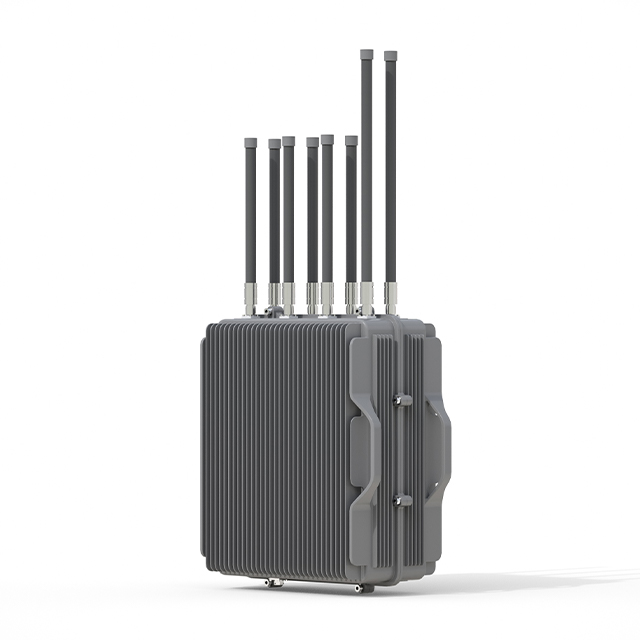
Airports require high precision. Advanced drone jammer systems integrate with air traffic control and unmanned traffic management platforms. Beamforming reduces interference while protecting critical flight paths.
Energy plants and data centers face espionage and sabotage risks. Integrated counter UAS systems provide continuous monitoring and adaptive mitigation. Fixed installations support persistent coverage.
Major public events require temporary yet reliable protection. Portable anti drone systems supplement fixed units for flexible coverage.
Environment |
Primary Risk |
Recommended Future Capability |
Airports |
Runway disruption |
Integrated detection + beamforming |
Energy Sites |
Surveillance or sabotage |
Adaptive multi-band jamming |
Stadiums |
Public safety threat |
Portable and fixed hybrid system |
Borders |
Smuggling drones |
Long-range distributed mesh |
Drone jammer usage is heavily regulated in many regions. Compliance requires licensing, logging, and coordination with telecom authorities. Organizations must integrate legal oversight into operational planning.
Precision targeting and geofencing prevent interference with emergency communications and civil aviation signals. Emission control safeguards public infrastructure.
Integrated counter UAS systems record frequency selection, activation time, and duration. Transparent audit trails enhance legal defensibility and internal governance.
The global anti drone solutions market continues expanding due to increased security awareness and technological modernization. Investment trends favor intelligent ecosystems over standalone devices. Modular next generation drone jammer systems support scalability and lifecycle upgrades.
Ragine’s positioning as a low-altitude security specialist with customizable OEM capabilities, detection integration, and comprehensive after-sales support aligns with this market shift toward full-spectrum counter UAS solutions.
Market Driver |
Innovation Response |
Strategic Impact |
Rising UAV autonomy |
AI adaptive mitigation |
Improved defense precision |
Urban air mobility |
Integrated airspace management |
Safer coexistence |
Regulatory tightening |
Controlled emission technology |
Compliance readiness |
Budget optimization |
Modular system upgrades |
Sustainable ROI |
Organizations should define likely threat vectors and operational priorities. Structured modeling clarifies required coverage and response times.
Pilot deployments validate system performance under real-world conditions. Gradual expansion reduces integration risk.
Future effectiveness depends on ongoing waveform updates and AI retraining. Vendors offering lifecycle support, technical training, and rapid firmware upgrades ensure long-term operational reliability.
Tip: Establish multi-year upgrade and compliance review cycles to maintain technical relevance and regulatory alignment.
The future of drone jammer technology centers on intelligence, integration, and adaptive precision. Next generation drone jammer systems now use AI powered drone jammer solutions and integrated radar drone jammer platforms to balance strong protection with regulatory control. With modular low-altitude defense products from Ragine, organizations gain scalable, precise, and reliable counter UAS value for safer airspace.
A: The future of drone jammer technology focuses on AI powered drone jammer solutions and integrated radar drone jammer platforms for smarter counter UAS systems.
A: Next generation drone jammer systems use cognitive drone jammer technology to target signals precisely while reducing collateral interference.
A: AI powered drone jammer solutions enhance classification, speed response, and support advanced counter UAS systems in complex environments.
A: Cost depends on multi-band coverage, integrated radar drone jammer platform features, scalability, and lifecycle software updates.


