Drones are everywhere today, yet their misuse is growing just as fast. Security teams now deploy the drone jammer, from airport drone jammer to prison drone jammer and military drone jammer. In this guide you will see where these trusted tools and Ragine products are used and why it matters.
Core High-Risk Security Zones for Drone Jammers
High-risk zones are sites where a small drone can cause outsized harm: runways, inner prison yards, stadium bowls, refineries, borders and similar strategic spaces. The goal is to stop aircraft from ever reaching these cores, not just disrupt them at the last second. Operators therefore combine airport drone jammer, prison drone jammer and stadium drone jammer systems with mobile teams carrying portable devices, so they can respond quickly while keeping interference focused on the real danger area.
Security zone type
Main threat profile
Typical jammer setup
International airport
Collision risk, runway incursion
Fixed airport drone jammer plus mobile response teams
Prison perimeter
Contraband drops, surveillance
Tower-mounted prison drone jammer sectors
Stadium or arena
Panic, attacks, illegal streaming
Stadium drone jammer arrays on roof and lighting masts
Drone jammer for airport security: securing runways and approach paths
Runways, taxiways and final approach paths are strict “no-drone” cores where any incursion is serious. A drone jammer for airport security works with radar and RF sensors to disrupt only confirmed threats, using directional beams aimed away from terminals and nearby communities and tightly coordinated with air traffic control procedures.
Airport drone jammer systems for terminal areas and airfield perimeters
Terminal buildings, hangars and cargo areas face surveillance risks such as spying on baggage flows or VIP movements. Airport drone jammer systems here use low-power, tightly focused antennas over roofs and perimeters, pushing drones away from gates and stands while keeping mobile networks and navigation aids running normally across the wider airport campus.
Drone jammer for prison perimeter and correctional facilities
Prisons face a mature drone threat because UAVs are cheap, disposable carriers for drugs, phones and weapons. A drone jammer for prison perimeter protection uses sector antennas on towers and corners to create overlapping coverage beyond the fence, forcing aircraft to lose control before they can drop packages while incident data guides fine-tuning of power and timing.
Drone jammer for stadium events and open-air concert venues
During stadium events, risk levels change as crowds arrive, gather and leave. A drone jammer for stadium events focuses on the bowl, fan zones and main entrances via arrays on lighting towers or temporary masts, disrupting drones that cross a defined inner radius above spectators while distant overflights may simply be tracked and recorded.
Drone jammer for critical infrastructure such as power plants and refineries
Refineries, power plants and chemical depots are attractive targets because aerial views expose pipes, storage tanks and control buildings. A drone jammer for critical infrastructure uses weatherproof antennas on towers and chimneys, integrated with cameras and fence sensors, so a drone arriving near critical processes or alongside a ground intruder triggers higher alerts and a coordinated response.
Military base drone jammer system for depots, airfields and training ranges
A military base drone jammer system supports routine perimeter defence as well as sensitive tests and exercises. High-power military drone jammer platforms cover open ranges and airfields, while more surgical antennas defend command centres and ammunition depots, often combining link jamming, navigation disruption and protocol-aware techniques inside a central command-and-control picture.
Border security drone jammer solution for cross-border smuggling corridors and checkpoints
Smugglers increasingly use drones over rivers, fences and dirt roads in remote areas. A border security drone jammer solution blends fixed coverage on known corridors with vehicle-mounted units that redeploy quickly, using narrow beams to cut control and navigation once sensors confirm a suspicious flight moving toward a likely drop zone.
Understanding Drone Jammers and Why Location Matters
All drone jammers overload or confuse the signals that keep a drone under control, but the optimal mix of bands, power and antenna patterns depends strongly on where they are used. Dense cities demand careful engineering so public safety radios, mobile networks and aviation beacons remain unaffected, while open coasts or deserts offer more flexibility but still require disciplined design to stay legal and predictable.
How drone jammers work in dense vs. open environments
Urban environments are full of reflections, shadow zones and existing antennas, so careless jamming risks harming many services at once. Operators therefore favour rooftop directional antennas aimed at plazas, streets or roofs where drones normally appear, with short activation times, while in open environments such as airfields or borders wider beams can work because background noise is lower and lines of sight are longer.
Threat types by location: espionage, smuggling, terror attacks and nuisance flights
Refineries and data centres mainly worry about espionage and mapping of critical processes, prisons and borders confront smuggling, and stadiums plan for nuisance filming, banner drops and potential attacks against dense crowds. Government districts and embassies focus on repeated low-profile flights that build long-term intelligence pictures, so jammer triggers there are often tuned to patterns rather than single, brief overflights.
Mapping risk rings: core zone, perimeter zone and extended early-warning zone
Many organisations model drone defence as three rings: a core zone where any drone is unacceptable, a perimeter zone where drones may stage for an approach and an outer early-warning zone focused on detection. This structure aligns sensors, jammers and responsibilities, reserving aggressive effects for the innermost areas while giving teams more time and context in the outer rings.
Drone Jammers for Government Buildings and Urban Sensitive Sites
Government buildings, courts, ministries and intelligence facilities sit inside busy cities where normal life must continue. A drone jammer for government buildings must stop spying and disruption without harming surrounding businesses or residents, so planners integrate tight-beam antennas into rooftop infrastructure and, in some capitals, use low-altitude defence packages from providers such as Ragine that are tuned to local laws and protest patterns.
Drone jammer for government buildings, parliaments and courts
Parliaments, presidential offices and supreme courts are high-value political targets. Several small jamming nodes distributed across roofs and nearby masts provide overlapping coverage that can be expanded for high-profile sessions, while on normal days patterns are kept narrow to minimise impact on neighbouring streets, media activity and everyday wireless services.
Protecting diplomatic compounds and embassies in city centers
Embassies face threats from state and non-state actors using drones for reconnaissance or provocation. Jammers at these sites are tightly aligned with cameras and guard posts, aimed above gardens, entrances and parking areas while leaving nearby apartments untouched, and coverage can be extended temporarily during crises or large demonstrations when crowds gather close by.
Integrating government-site jammers with citywide surveillance and C2 systems
When a drone jammer for government buildings connects to citywide command-and-control systems, operators see camera feeds, RF tracks and ground units on one screen. They can quickly judge whether a drone is linked to a protest, a stadium event or an industrial site, and shared dashboards plus clear procedures keep responses consistent, documented and defensible.
Portable Drone Jammers for Mobile and VIP Protection
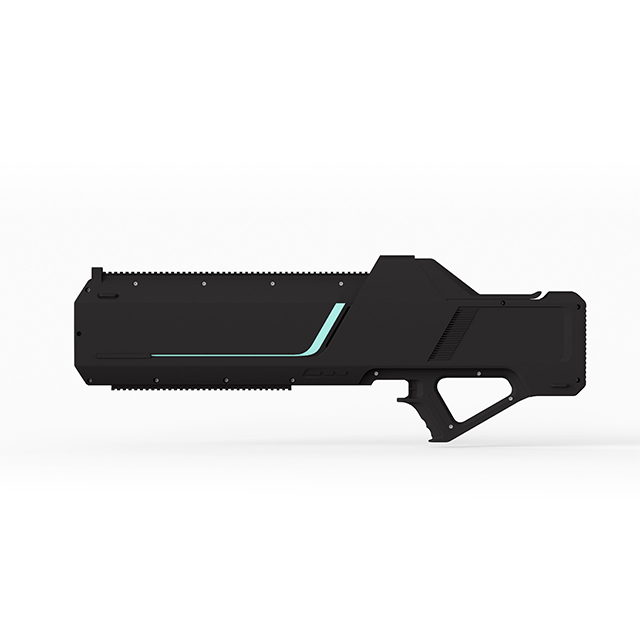
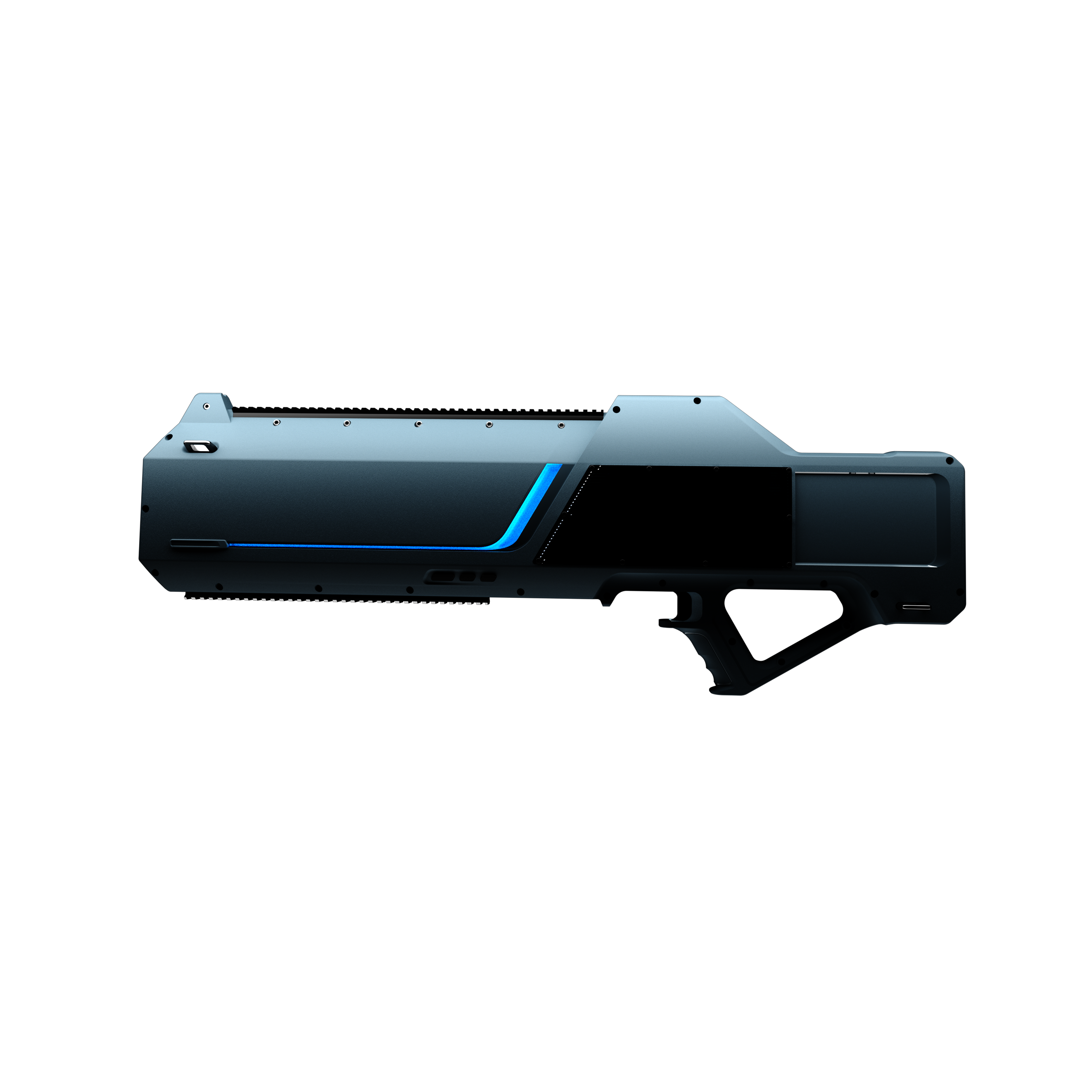
Portable drone jammers extend protection beyond fixed fences and roofs, which is crucial for VIP travel and temporary events. Rifle-style or backpack devices can be deployed by one operator in seconds, giving close-protection teams a mobile shield; handheld designs from companies like Ragine bundle full-band jamming of common control and navigation signals into simple, trigger-operated units.
Portable drone jammer for VIP protection at temporary venues and motorcades
VIP motorcades cannot rely solely on fixed city defences because threats may appear at any junction or overpass. Protection teams therefore assign at least one vehicle with a portable drone jammer that can be aimed from a secure position, while backpack units guard stages and crowd edges at temporary venues using simple hand signals and pre-agreed codes.
Close-protection tactics for outdoor walkways, entrances and red-carpet areas
Outdoor entrances, hotel forecourts and red-carpet zones attract cameras and crowds, which also makes them attractive drone targets. Close-protection teams now include rooftop and park scans in their advance work, and during events one operator continuously watches the sky so that, if a drone appears, the VIP can be moved to cover while the jammer blocks the aircraft’s approach.
Using handheld and backpack jammers to plug “blind spots” around fixed systems
Even strong fixed defences have blind spots caused by building shadows or antenna restrictions. Handheld and backpack jammers patrol these weak sectors during high-risk periods such as summits or championship matches, and when a drone enters a blind area the nearest team moves to a pre-planned intercept point and applies short, targeted bursts of jamming.
Fixed, Vehicle-Mounted and Integrated Systems by Environment Type
Mature programmes mix fixed, vehicle-mounted and integrated systems instead of relying on a single format. Fixed infrastructure drone jammer networks protect airports, refineries, data centres and prisons; vehicle-mounted systems cover borders, convoys and temporary checkpoints; integrated platforms fuse radar, RF detectors, cameras and jammers into one command environment, often delivered as a scalable low-altitude defence ecosystem by vendors such as Ragine.
System type
Best suited environments
Key strengths
Typical limitations
Fixed infrastructure
Airports, refineries, prisons, data centres
Continuous coverage, deep integration
Limited flexibility once installed
Vehicle-mounted
Borders, military patrols, convoy routes
High mobility, quick redeployment
Requires trained crew and vehicles
Integrated C-UAS
Capitals, large industrial regions
Sensor fusion, centralised decision support
Higher cost, longer deployment timelines
Fixed infrastructure drone jammer networks around airports and industrial hubs
At airports and industrial hubs, antennas on control towers, chimneys and masts are aligned with runways, tank farms and loading docks. Jamming normally activates only when paired sensors confirm a real threat, limiting unnecessary RF emissions and making it easier to adjust the pattern as sites expand or operational layouts change.
Vehicle-mounted military drone jammer platforms for patrols and convoys
Vehicle-mounted platforms shine where threats are mobile and routes are unpredictable. A truck or armoured vehicle carrying a military drone jammer can escort convoys, patrol borders or protect temporary field sites, using telescopic masts or stabilised antennas to disrupt drones while stationary or moving slowly along critical routes.
Stadium drone jammer arrays integrated with CCTV and access control
Stadium drone jammer arrays mount on lighting structures or roof trusses that already host power and cabling. When integrated with CCTV and access control, operators see both the drone and likely pilot locations near gates or stairwells, often resolving incidents quickly by approaching the operator and keeping jamming time to a minimum.
Layered defence: combining portable, vehicle and fixed jammers in one site
The strongest concepts treat jammers as complementary layers: fixed systems guard core assets, vehicle-mounted units form a mobile middle ring and portable devices provide flexible outer coverage during unusual events or construction. Clear playbooks explain who controls each layer and how responsibility passes as a drone moves, preventing conflicting or redundant actions.
Law Enforcement, Prisons and Public Safety Applications
Police, prison services and other public-safety agencies sit where drone misuse meets everyday life. They must deal with nuisance flights, protect demonstrations and manage drones during emergencies, while also tackling serious crime and terrorism, so drone jammers are powerful but sensitive tools that require strict policies on when to deploy, where to aim and how long to operate.
Prison drone jammer setups to stop contraband drops and surveillance
Prison drone jammer setups combine RF sensors, cameras and carefully placed antennas to cover yards, roofs and blind spots. When a drone crosses a virtual perimeter, operators trigger jamming that forces it to hover, land or return home before dropping its payload, and recovered aircraft and cargo support investigations into the human networks behind the flights.
City-level law enforcement use around major events and protest routes
During major events and protests, authorised drones may provide situational awareness while unauthorised units create distress or risk. City-level law enforcement therefore uses mobile jammers sparingly near gathering points, coordinating with licensed media and emergency drones and treating disruption as a last resort for aircraft that ignore warnings or behave aggressively.
Coordinating with aviation and telecom regulators when jamming in public spaces
Because jamming can affect aviation and telecom services, agencies work closely with aviation authorities, spectrum regulators and network operators to define permitted bands, power levels and procedures. In some countries only national bodies may operate jammers, while local police rely more on detection and physical interception; joint exercises and transparent reporting help refine safeguards over time.
Environmental, Conservation and Remote-Area Deployments
Drone misuse can harm wildlife, fragile ecosystems and sensitive research projects, not just buildings and people. Conservationists report nests disturbed by drones and poachers using aerial footage to locate endangered species, while remote research bases and test ranges worry about leakage of intellectual property or classified work, so in these settings jammers are used carefully and combined with education.
Keeping drones away from wildlife reserves and conservation areas
Wildlife reserves host species that are highly sensitive to noise and visual intrusion. Low-power jammers at entrances or viewing platforms enforce no-fly zones over breeding areas by weakening control links as drones cross into protected sectors, while rangers explain rules to visitors and suggest alternative image-capture options to encourage voluntary compliance.
Protecting remote research bases and test ranges from aerial snooping
Remote research centres and test ranges may seem isolated but are attractive to determined intruders. Jammers positioned around key labs, pads and observation posts prevent unauthorised drones from loitering above sensitive hardware, and tracking data helps estimate launch points and guide patrols to likely access routes along fences or access roads.
Using infrastructure drone jammer solutions for pipelines, dams and offshore platforms
Pipelines, dams and offshore platforms stretch across long distances and harsh environments. Infrastructure drone jammer solutions mix fixed towers at strategic nodes with mobile units on service vessels or vehicles, protecting valve stations, spillways, control systems and offshore decks where any drone incident can have disproportionate safety or environmental consequences.
Operational Best Practices by Scenario
Successful deployments depend as much on process as technology. Best practice includes careful planning, clear procedures and regular training across airports, borders, prisons and stadiums, with counter-drone operations treated like fire safety or cyber security so lessons from each incident feed into updated playbooks and future responses become faster and more precise.
Combine mobile and fixed units, link to ground patrols
Harbor
Ship lanes, fuel depots, cruise terminals
Protect navigation aids, avoid interference with marine radios
Site surveys and RF planning for airport, border and harbor deployments
Thorough site surveys assess elevation, building materials, existing antennas and nearby communities, then measure noise levels across relevant bands. Modelling shows how jamming signals will propagate and where they might overshoot into sensitive areas, guiding phased RF plans that are updated as layouts, traffic and neighbouring infrastructure evolve.
Safety buffers and no-jam corridors for prisons, stadiums and hospitals
Some locations must remain free from jamming because they depend on uninterrupted communications, such as hospitals, air-ambulance pads and fire stations. Planners therefore mark safety buffers and no-jam corridors in configuration software, align them with helicopter routes or hazardous-material roads and favour non-jamming responses when drones appear along those protected paths.
Minimizing collateral interference with emergency communications and GPS
Modern jammers use narrow filters, directional antennas and adjustable duty cycles to limit energy to the minimum needed, and some monitor local spectrum occupancy to back off automatically when critical signals appear. Operators follow rules that cap activation time and require post-event reporting, using logs and joint analysis with telecom and emergency services to improve safety margins.
Training local teams to identify drone threats and trigger jamming only when necessary
Local teams need training on drone basics, visual spotting, RF signatures, legal frameworks and coordination with other security functions. Simulators and test flights show how drones react to different jamming modes, while clear communication routines ensure aviation and emergency partners are informed whenever jamming begins or ends, turning powerful tools into disciplined, precise instruments.
Choosing the Right Drone Jammer for Your Use Case
Choosing the right jammer means matching technology to risk, environment and organisational culture. A drone jammer for critical infrastructure may prioritise ruggedness and deep integration with industrial systems, while a portable unit for event security emphasises ergonomics and battery life; often, a modest but well-integrated solution outperforms a headline-grabbing standalone jammer.
Matching range and power to airport, prison perimeter or stadium event size
Range and power figures only make sense when tied to real geometry. A small regional airport might favour moderate power with tight beams that protect approaches without spilling into nearby towns, while a large hub may justify higher power only with strong governance; prisons and stadiums likewise size coverage carefully to stay inside fences and away from hospitals or heliports.
Balancing portable vs. fixed vs. vehicle-mounted systems for each environment
Every environment mixes static and dynamic risks, so relying on a single system type is risky. Fixed jammers give baseline protection over immovable assets, vehicle-mounted units cover patrols and remote incidents, and portable devices handle blind spots and surges during major events; scenario workshops and experienced integrators such as Ragine help turn these ingredients into balanced, resilient architectures.
Scalability: starting with key zones and expanding coverage as threats evolve
Scalability keeps counter-drone programmes relevant as threats and technologies evolve. Many organisations begin with a few critical sites, invest in open architectures and then connect secondary locations, mobile units and regional control rooms over time, keeping documentation, training and maintenance aligned so the system grows as one coherent, manageable whole.
Conclusion
Drone jammers are now core protection at airports, prisons, stadiums, borders, bases and critical infrastructure worldwide. They disrupt smuggling, espionage, nuisance flights and potential attacks before drones threaten high value people, assets or events. Effective use demands careful RF planning, legal compliance, coordination with aviation and telecom partners, plus disciplined operator training. By combining fixed, vehicle mounted and portable systems, and leveraging advanced Ragine products, organisations build layered, reliable, low altitude defences.
FAQ
Q: What is a drone jammer and where is it used?
A: A drone jammer blocks control signals, protecting airports with an airport drone jammer, plus prisons and stadiums.
Q: Where is a prison drone jammer most useful?
A: A prison drone jammer covers yards and roofs, while stadium systems target the spectator bowl.
Q: Why do refineries use an infrastructure drone jammer?
A: An infrastructure drone jammer helps prevent espionage or sabotage and supports military drone jammer units guarding wider zones.
Q: Which factors affect border security drone jammer solution cost?
A: Price depends on coverage, sensors, and whether you add portable drone jammer units for patrols.
The R-Shield-600A represents a significant advancement in UAV countermeasure technology, offering a fixed-site solution for enhancing low-altitude security defense. Despite its fixed installation, the device remains highly versatile and adaptable, allowing for easy deployment and flexible disassembly when needed. This feature ensures seamless integration into various security infrastructures, providing users with a reliable and efficient solution for protecting critical assets and infrastructure in low-altitude environments.
The innovative features of R-Shield-606A redefine the landscape of UAV countermeasures, offering advanced capabilities to disrupt satellite navigation signals and effectively thwart unauthorized UAV access. By generating deceptive signals across multiple satellite navigation frequency bands, it introduces a new level of disruption, impairing UAVs' ability to receive accurate navigation coordinates and navigate effectively. This disruptive capability is further enhanced by the device's directional diversion functionality, which enables precise denial of access to specific areas and facilitates the capture of UAVs by redirecting them away from restricted zones.
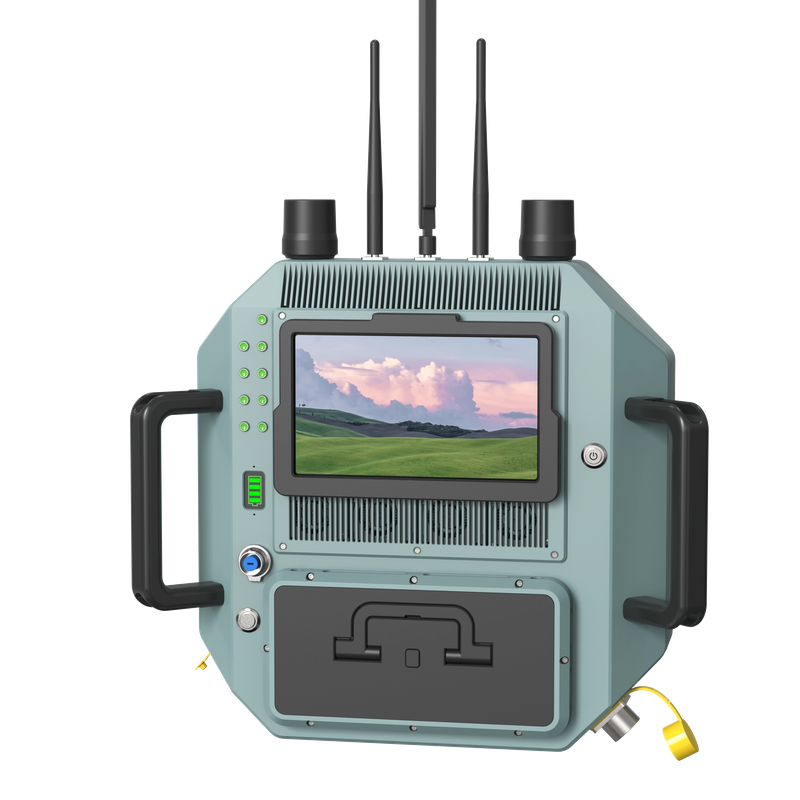
The product utilizes wide-range radio frequency scanning for feature recognition and decoding, enabling the detection, direction finding, and tracking of unauthorized intruding drones. It supports both standalone and networked operations, featuring a highly integrated design. In addition, it is capable of continuous operation during nighttime, dense fog, and adverse weather conditions.
The product is capable of efficiently discovering, confirming and tracking UAVs, providing critical information for the C-UAV system. It can either operate independently or combine with a radar system.
It provides rapid target localization and real-time forensics in complex environments,moreover it allows to be equipped with the laser rangefinder module if required that realize the function of discovering, locating, tracking, identifying and tracing targets in 24/7.
This product efficiently detects, confirms, and tracks UAVs, providing crucial information to the system. It possesses the flexibility for both independent operation and integration with radar systems. It can swiftly locate targets in complex environments, offering real-time evidence. Additionally, modules such as laser ranging can be added as needed, enabling all-weather, all-time, and all-dimensional discovery, positioning, tracking, identification, and tracing of targets.